Firefighter In Military - Formal education equivalent to a high school diploma; plus five years of experience in firefighting or a related field, including one year of team leadership. Must be able to obtain a Department of Defense Confidential Clearance under Air Force Regulation 205-32, paragraphs 3-39, and must have completed and approved the Department of Defense Fire/Rescue Training Course prescribed by National Fire Protection Standards 1003, 1500, and related standards.
Additional requirements established by the agency for recruitment purposes are subject to review and approval by the Office of Personnel Management. Other job-related education and/or experience may be substituted for all or part of these basic requirements in addition to the certification or licensure requirements, subject to approval by the Board of Eligibility.
Firefighter In Military
 Source: upload.wikimedia.org
The Air Force works with unusual materials and unique environments around the world, so we need experts who are ready for anything. As a firefighter in the Air Force, firefighting specialists handle everything from brush fires to burning rocket fuel and hazardous material fires.
Minimum Qualifications
In keeping with our mission of keeping others safe, these specialists not only operate from Air Force bases, but also assist civilian fire services when needed. All army firefighters must first pass basic training or recruit training.
Army recruits take a 10-week foundation course, while Air Force recruits take an 8.5-week foundation course. Navy and Marine Corps recruits spend seven to nine weeks in recruit training. Then comes professional training. The Louis F. Garland Department of Defense Fire Academy at Goodfellow Air Force Base, Texas provides firefighting training to all branches of the military.
– First aid management – Fire training procedures – Rescuing people and protecting property by forcibly entering vehicles, aircraft or buildings – Inspecting buildings, aircraft and equipment for fire hazards – Proper use of fire extinguishers, hoses and pumps – Filling fire extinguishers and repairs
Equipment for fighting fires – driving emergency vehicles and fire trucks means taking an Armed Forces Vocational Aptitude Battery course to ensure you have what it takes to become a firefighter. Firefighters in the military must have these skills, according to the Go Army: If possible, equip yourself with firefighting-related training, such as Medic or Corpsman.
Final Recommendation
Hazardous materials and firefighter training will also be beneficial. Finally, take general education courses so you can earn an associate degree. The training you receive as a Marine Corps firefighter will translate into a career you can pursue in the civilian world.
 Source: i.ytimg.com
You can find a job working with a city, county or private fire department. You'll have the skills fire departments are looking for, including salvage work and rescue operations. Because fire risks persist in both the military and the private sector, the Marine Corps maintains its own fire department.
Those firefighters who enlist in the military have the responsibility to save property and lives. They are responsible for fires on bases or ships in active service. They may also be called upon to control wildfires.
MAINVILLE: The firefighter profession offers great opportunities for advancement and advancement. In a reasonable amount of time, you can be promoted to Fire Inspector, Platoon Chief or Deputy Fire Chief. You may also have the opportunity to become a fire chief.
Pack Test – Wildland Fire Fighter Pack Test
The fire brigade is a paramilitary organization. Many of the common terms used by fire departments, such as captain and lieutenant, are taken directly from the military. Words like code, honor, commitment and integrity are as important to the fire department as they are to the military.
MAINVILLE: Becoming a military firefighter takes courage and dedication, but it also has many rewards - great pay, world-class equipment, worldwide travel, opportunities for advancement and being one of Canada's most highly trained and versatile fire brigades.
There, you'll learn how to fight fires, from bush fires to vehicle fires, building fires, wildland fires and rocket fires. You will learn how to handle hazardous materials. You'll learn how to inspect buildings, aircraft and equipment for fire hazards.
You'll learn how to repair and refill firefighting equipment. You will learn how to drive fire trucks and emergency vehicles. You will also learn how to give first aid to injured people. Regardless of age, men and women with military backgrounds are usually very mature.
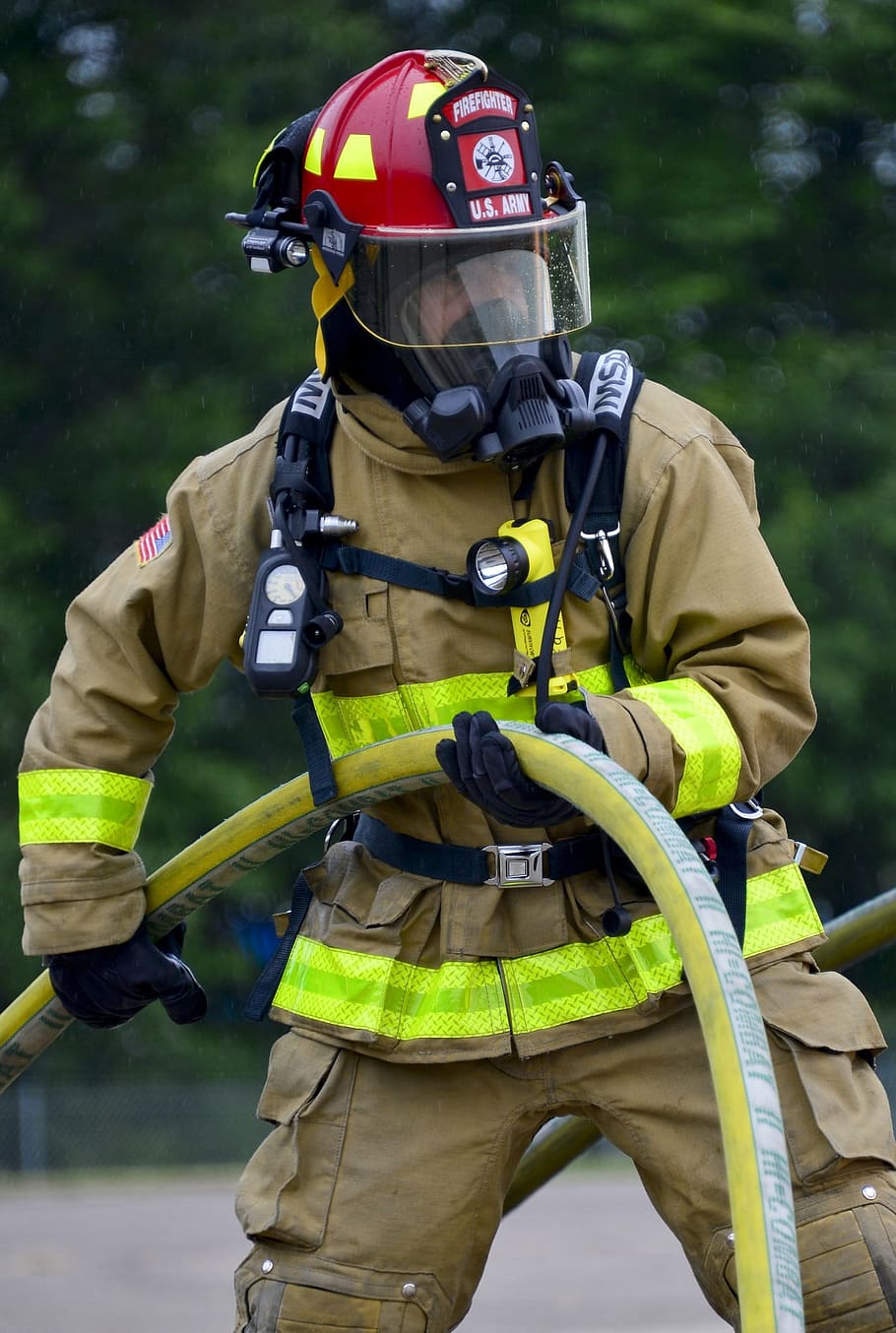 Source: p1.pxfuel.com
The Next Step Find The Right Veteran Job
They understand the need to get along with others, especially people from different backgrounds. They understand the need to commit and work until the job is done. They are used to working long hours in less than ideal conditions.
Get used to the heat and work in it. Plus, with the 60+ pounds of gear you're carrying and carrying, and the heat, you need to stay hydrated. Dealing with a fire scene is no easy feat, and frankly, it takes a brave person to get into a burning building to save another.
Stew Smith is the host/editor of the National Strength and Conditioning Association's Tactical Strength and Conditioning Program and is a Certified Strength and Conditioning Specialist (CSCS). There are also more than 800 articles on the Military.com Fitness Forum focusing on the various fitness, nutritional and tactical issues military members face throughout their careers.
Don't be intimidated by all the candidates with various certifications under the sun. When you fulfill your promise to the American people, they can earn it as a full-time student. All enlistees complete basic military training, including time spent in the classroom and in the field, covering tactical and survival skills, physical training, military life and customs, and weapons training.
Knowledge Skills And Abilities
Firefighters will gain skills through courses and on-the-job experience, including firefighting training. Training may include the following: The USAF recommends that you have a general knowledge of firefighting duties, no record of claustrophobia, and normal color vision.
You must also meet National Fire Protection Association physical standards. Firefighting is a very physically demanding job and must be able to bear heavy loads for long periods of time. Getting along in a fire station is extremely important to being successful in the fire service.
Courtesy of fellow firefighters is essential. It is expected to clean itself up. This is one of the first things soldiers and men learn in basic training. Job #: 22175998 State: Sebastian Posted End Date: March 8, 2023 Estimated Starting Salary: $36,155.00 188th Air Guard - Ebbing (Fort Smith) The mission of the Military Department is to provide Arkansas employees with the professional
 Source: static.vecteezy.com
Staff, to help maintain and improve the readiness of Arkansas National Guard troops through effective financial management of state resources, human resource management, and quality management of the Arkansas National Guard program. The first phase of training is the Basic Military Qualification Course, or Basic Training, held at the Canadian Forces Leadership and Recruiting School in Richelieu-sur-Saint-Jean, Quebec.
Work Environment
The training provides essential core skills and knowledge common to all industries. One purpose of this course is to ensure that all recruits maintain Canadian Armed Forces (CAF) physical fitness standards; therefore, the training is physically demanding.
It's basically a walk of varying degrees of difficulty. You must pass three levels of duty to proceed. The Arduous Duty Pack test is the most difficult test. It consists of a flywheel with a 45lb gear and has a range of 3 miles.
You have 45 minutes to negotiate that distance without running. You can easily walk three miles in 35-40 minutes if you use a 45 lb powered walker truck. The moderate pack test is a loose two-mile run with 25 pounds of gear in less than 30 minutes.
The Light Pack test is walking a mile without any gear in 16 minutes. No running allowed - brisk walking only. According to the U.S. Bureau of Labor Statistics, the job outlook for firefighters outside the military is roughly average, with job growth expected to be about 5 percent a year.
Being in good health and having paramedic experience gives you the best chance of getting a job after military service. Whether you're looking to spruce up your resume, find veterans job fairs in your area, or connect with employers looking to hire veterans, Military.com can help.
Sign up for a free Military.com membership to get job postings, guides, advice and more delivered straight to your inbox. Soldiers respect authority and understand the chain of command. Fire departments operate on the same hierarchy principles as the military.
 Source: steamuserimages-a.akamaihd.net
The team clearly understands code and credit. These qualities are extremely important in the fire service because firefighters are held to higher standards than the average person in the community. If you are an active duty military and considering civilian employment, many veterans go into the fire department.
There are many firefighting career options available at the municipal and county levels, state fire academies, and federal fire departments of the Department of Defense and the US Fire Administration, just to name a few. There are also a number of firefighter employment organizations on the federal side: Bureau of Indian Affairs, Bureau of Land Management, Fish and Wildlife Service, National Park Service, and the U.S. Forest Service.
Local and state fire departments also have wildland fire services. Many veterans find a home in the fire department because of the camaraderie and sense of shared mission they offer, similar to what service members find when they serve in the military.
I am from Alabama. I want to ask you will get good gear because I'm full. fire brigade. Without any good equipment, my fellow firefighters did a poor job. I love the Marines, but I don't want to be with an air bottle that's going to die in a week or so, or a truck that's going to die.
Will that be a problem? Martin: Coming here, you're obviously new to the block. When you first come to the lobby, everyone puts you through your paces. It's all fun, they just want to see what you do with it.
Martin: Every day you come in and check your vehicle and make sure everything is in good working order. After that, you'll need to complete routine maintenance, including making sure your fire extinguishers and fire alarm system are in working order.
We maintain fire suppression systems and inspect many different workplaces to ensure fire prevention is being enforced to provide a safe working environment for everyone on the base. You have to decide which class you want to join.
:max_bytes(150000):strip_icc()/170224-F-GY014-001-5a35f9efb39d030037d154de.JPG) Source: www.liveabout.com
Source: www.liveabout.com
Whether you want to be an Army firefighter, Air Force firefighter, Navy firefighter, or Navy firefighter, you'll need to meet the requirements to join that branch of the U.S. military. Firefighters prevent fires from causing loss of life or property.
They perform a variety of missions including aircraft rescue, structure and wildland firefighting, vehicle rescue, hazardous materials and confined space/high angle rescue. Fire investigation, fire prevention and life safety inspections are also areas of expertise. Martin: The camaraderie is second to none.
We are one big family and we are always together whether we are on or off duty. Even when we were away from home due to deployment, the connection continued as we tended to attend to each other's family needs.
Having said that, I will tell you that all military firefighters in the Army, Marine Corps, and Air Force receive technical training at the Louis F. Garland Fire Academy in San Angelo, Texas. I've heard rumors that the Navy is sending some guys there, but I can't personally confirm that.
As an Air Force firefighter, you will report to the fire station daily and complete all the daily tasks of running a fire department, including training and day-to-day details. Serving in the military makes regular fitness testing less stressful than an average firefighter candidate might experience.
However, you don't want to assume you can master these job-related physical skills as you can with your military PFT. It does help, but one has to understand the specific requirements. Simply adding stair training, buddy carry, crawling, and sledgehammer work will help tremendously when adding to the base of a healthy soldier.
us military firefighter, military firefighter training, military firefighter jobs, military firefighters protection act, military firefighter pay, mos 12m, military firefighter heritage foundation, army firefighter
 Source: www.wwag.com
 Source: i.ebayimg.com
 Source: thumbs.dreamstime.com
 Source: www.dsf.my
 Source: hips.hearstapps.com
 Source: suncruisermedia.com
 Source: media.defense.gov
 Source: www.army.mil
 Source: upload.wikimedia.org
 Source: media.defense.gov
 Source: i.pinimg.com
 Source: pharmacyreviews.to
 Source: assets.newatlas.com
 Source: media.springernature.com
 Source: www.postmymeds.co.uk
 Source: media-cldnry.s-nbcnews.com
 Source: jeepest.com
 Source: cdn11.bigcommerce.com
 Source: cms.frol.us
 Source: www.cokertire.com
 Source: photos.machinefinder.com
 Source: www.travelsinorbit.com
 Source: cloudfront-eu-central-1.images.arcpublishing.com
 Source: thumbs.dreamstime.com
 Source: c8.alamy.com
![Dvids - Images - Texas Soldier Graduates As First Female Cannon Crewmember From Wisconsin Military Academy [Image 1 Of 3]](https://d1ldvf68ux039x.cloudfront.net/thumbs/photos/1905/5417183/2000w_q95.jpg) Source: d1ldvf68ux039x.cloudfront.net
Source: d1ldvf68ux039x.cloudfront.net